
2025年12月12日
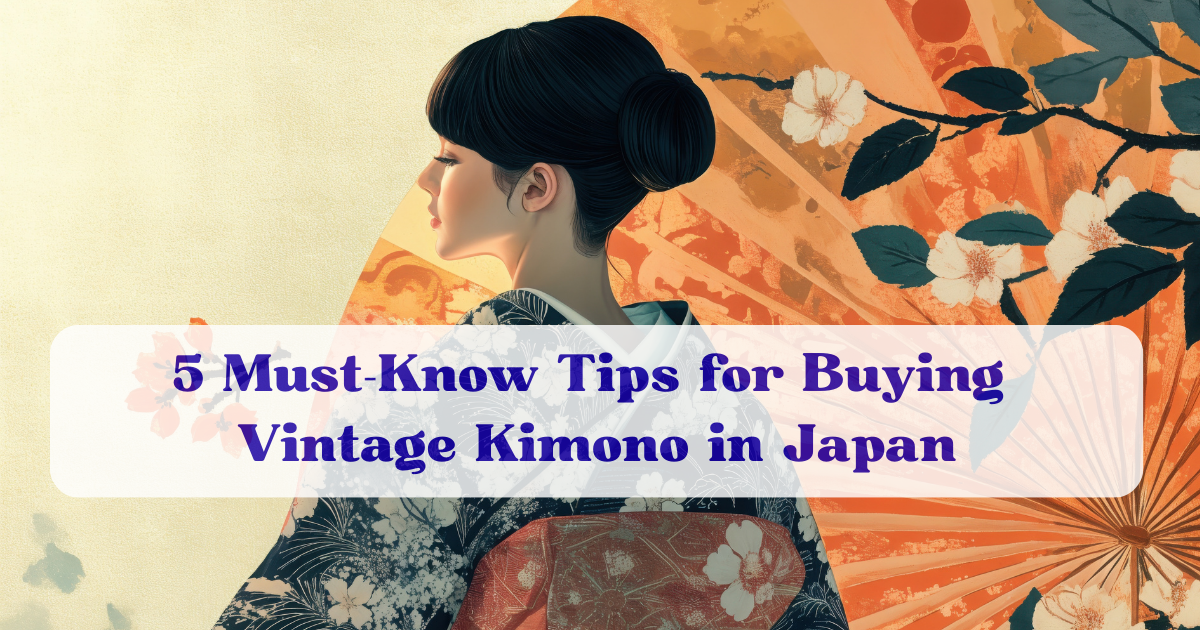
5 Must-Know Tips for Buying Vintage Kimono in Japan
Looking for a truly special souvenir that’s beautiful, meaningful, and easy to pack? Skip the pricey new items and hunt for a vintage kimono or haori instead.
These “recycle” treasures are sustainably sourced, meticulously made, and often far more affordable than you’d expect, making them the perfect find for travelers.
This is A Beginner’s Guide to Sizing, Style & Value, teaching you exactly what to look for—from how to master the tricky sizing, to effortlessly styling a haori jacket, and finding real silk at surprising prices. By the end, you’ll know how to shop like a pro and bring your unique piece of Japanese culture home with confidence.
Table of Contents
1. Introduction
2. Quick Glossary
3. Where to Shop
4. How to Choose: The 5 Tips
5. Style Ideas
6. Buying for Remake?
7. Care & Packing
8. Quick Checklist
9. Wear the Memory. Embrace a New Style
Ready for a treasure hunt?
1. Introduction
Looking for a souvenir that’s beautiful, meaningful, and easy to pack? Skip the pricey brand-new kimono and hunt for a vintage piece instead. “Recycle” or secondhand kimono are a sweet spot for travelers: sustainably sourced, meticulously made, and often far more affordable than you’d expect.
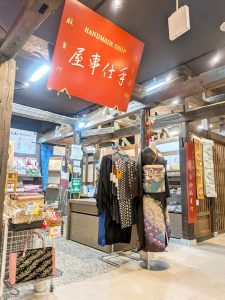
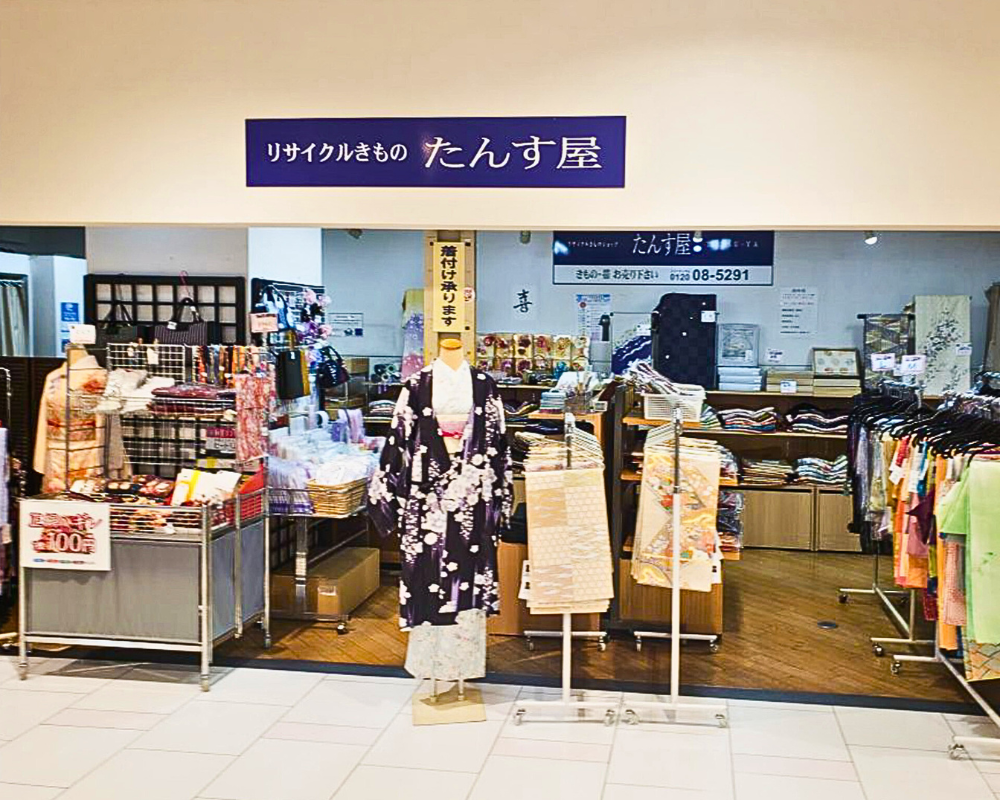
Shops like Tansuya curate racks of pre-loved kimono, haori jackets, and obi belts so you can compare fabrics, try on sizes, and find a one-of-a-kind treasure to wear—or to repurpose as textile art.
In this guide, you’ll learn how traditional sizing really works, what parts to inspect, why a haori is the easiest gateway piece, how to think about pricing, and how to take advantage of tax-free shopping when eligible. By the end, you’ll know exactly what to look for and how to bring your find home with confidence.
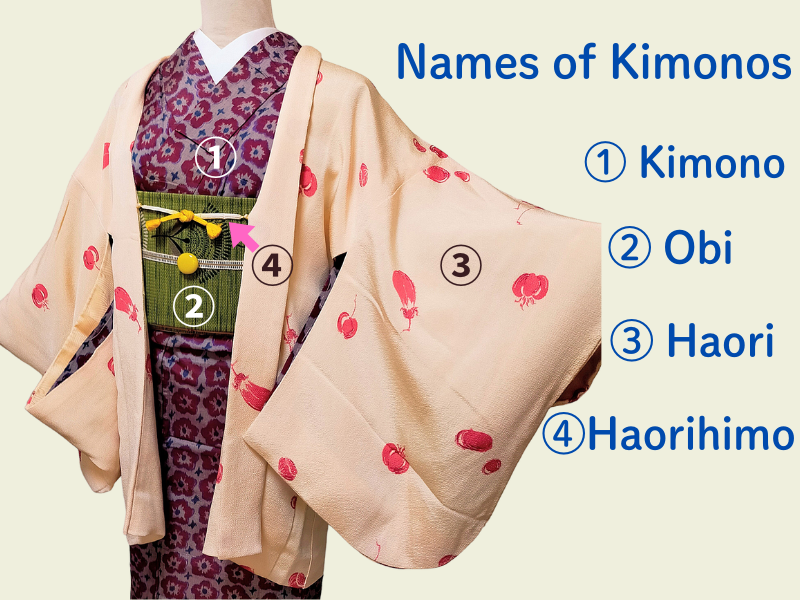
2. Quick Glossary
- Kimono(着物) — A traditional T-shaped robe that wraps left over right and is secured with an obi. Most are intentionally long and adjusted with a waist fold.
- Haori(羽織)— A hip- to thigh-length jacket worn open—no obi or special tying needed. Great first piece for any body size.
- Obi(帯) — A wide decorative sash used to secure a kimono. Beautiful but can be complex to tie; not required for haori styling.
- Ohashori(おはしょり) — The waist fold that shortens a kimono’s visible length. This is why a kimono longer than your height is normal.
- Eri(衿) — The collar area. Check for makeup discoloration or wear.
- Sode(袖) — Sleeve ends/cuffs. Look for stains or fraying from daily use.
- Lining(Douura 胴裏 / Hakkake 八掛) — The inner fabric. Inspect for tears, discoloration, or brittleness—especially on silk.
- Nagajuban(長襦袢) — An under-kimono layer worn beneath formal kimono; optional if you’re styling a haori over Western clothes.
- Himo(紐)— Ties used to keep the kimono in place before the obi. Handy if you plan to wear a full kimono.
- Tansu(箪笥) — A traditional wooden chest where many vintage kimono have been stored—hence today’s abundance.
3. Where to Shop
Start with recycle kimono shops. These secondhand specialty stores clean, sort, and tag pieces by type and occasion. A beginner-friendly example is Tansuya: you’ll find racks of kimono, haori jackets, and obi, often with staff who can explain how to wear, fold, and care for them.
Other good hunting grounds
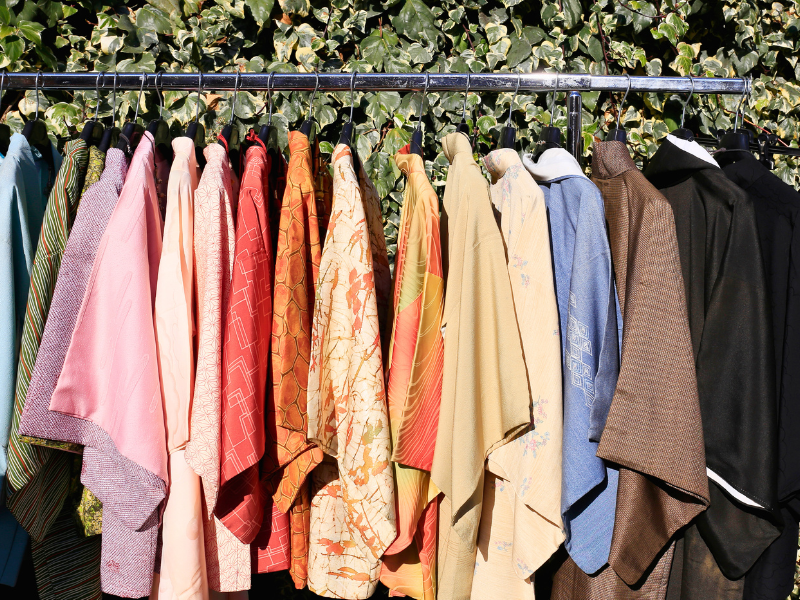
- Vintage/antique boutiques: Unique patterns and older weaves; condition and pricing vary, so inspect carefully.
- Flea markets & temple fairs: Great for bargains and serendipity; bring cash and manage expectations about condition.
Heian flea market : Kyoto’s most famous flea market
Oedo antique market : The Largest outdoor Antique Market in Japan - General thrift/“recycle” shops: Not kimono-specific, but you may score inexpensive pieces or fabrics for remake projects.
What to expect in-store
- Clear tags: Many shops label type (kimono/haori/obi), fabric (silk/wool/synthetic), and condition notes.
- Fitting space: You can usually try on haori over your clothes; for full kimono, staff may help with draping.
- Payment: Cards are widely accepted at chains; cash is handy for markets and small independents.
- Tax-free: Tourists with a passport can often shop tax-free when spending over a store’s threshold (commonly around ¥5,000 before tax in one store on the same day). Look for the TAX-FREE sign or ask staff.
- Packaging: Most stores can fold compactly; consider a light tote or packing cube for your suitcase.
Handy phrases
- May I try this on? → Shichaku shite mo ii desu ka?
- Is tax-free available? → Menzei dekimasu ka?
- Are there any stains? → Shimi wa arimasu ka?
- Could you show me how to fold it? → Tatamikata wo oshiete kudasai.

4. How to Choose: The 5 Tips
Tip 1: Don’t worry about perfect sizing
Most traditional women’s kimono are intentionally longer than your height. You shorten the visible
length with an ohashori (waist fold). Focus instead on how it sits at the shoulders and how the sleeves feel when you move. If you want an easy, size-flexible start, pick a haori (kimono jacket)—it’s worn open, no obi required.
Pro tip: If you’re tall, look for longer sleeve-from-center measurements (yuki 裄). If you’re petite, an ample ohashori fold will still look neat.
Tip 2: Inspect the condition like a pro
Vintage means pre-loved, so do a quick checklist:
- Collar (Eri): any makeup discoloration?
- Cuffs (Sode): fraying or stains from daily wear?
- Hem & Lining: tears, discoloration, or brittle silk inside?
Minor spots are normal—and can be charming. If wear bothers you, target pieces labeled “excellent” or choose bold patterns that make small marks disappear.
Pro tip: Shopping for remake (quilts, cushions, wall art)? Prioritize fabric quality and pattern placement over perfect condition.
Tip 3: Make haori your effortless street style
You don’t need a complex obi to enjoy Japanese flair. Throw a haori over a T-shirt and jeans, a slip dress, or tailored trousers. It’s unisex, travel-friendly, and photographs beautifully. Add sneakers for casual days or loafers/boots for a smarter edge.
Pro tip: Some haori come with a decorative tie (haori-himo). Clip it on for a slightly closed front—or remove it for a clean, open drape.
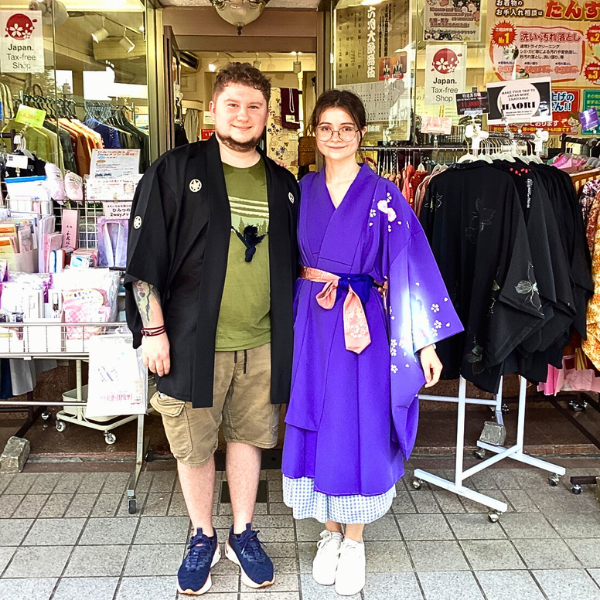
Tip 4: Real silk at surprising prices
One joy of recycle kimono shops is value. You’ll often find real silk at prices comparable to a T-shirt—especially casual patterns. Prices vary with fabric, technique, age, and condition: everyday pieces are usually most affordable; formal showstoppers (e.g., furisode, embroidered obi) cost more.
Pro tip: On a budget? Look for komon (all-over small patterns) or off-season colors—great quality without the premium.
Tip 5: Look for the TAX-FREE sign
Tourists can often shop tax-free when spending over the store’s threshold (commonly around ¥5,000 before tax in one store on the same day). Bring your passport, and ask staff at checkout. Some shops seal purchases until departure per regulations.
Pro tip: Look for the red TAX-FREE logo at the entrance, or ask: “Menzei dekimasu ka?” meaning “Can I get a tax refund?”
5. Style Ideas
A. Casual: Weekend-ready Haori
Throw a haori over a white tee and straight-leg jeans. Add clean sneakers and a small crossbody bag. Pick a haori with a bold pattern to make photos pop, or a muted komon for subtle texture.
Why it works: The open front creates vertical lines that lengthen your frame; the lightweight drape travels well.
B. Smart: Gallery or Dinner
Layer a dark solid haori over a slip dress or tailored trousers. Swap sneakers for loafers or ankle boots. Keep accessories minimal (a silver cuff, structured tote) to let the textile shine.
Tip: Monochrome outfits make intricate weaves (like rinzu jacquard) pop without feeling busy.
C. Genderless Street: Layer & Play
Pair a mid-length haori with a heavyweight tee, relaxed chinos, and chunky boots. Add a cap or beanie. If your haori has haori-himo, clip it for a slightly closed silhouette—or remove for flow.
Pattern math: Large-scale motifs → keep the rest simple. Small-scale prints → you can mix in subtle stripes/texture.
D. Seasonal & Practical
Summer: unlined (hitoe) haori breathe better; choose lighter hues.
Winter: layer over knits; consider a scarf at the collar to protect from makeup transfer.
6. Buying for Remake?
Hunt with a crafter’s eye. Vintage kimono and haori are fantastic raw materials for quilting, cushions, tote bags, scarves, table runners, or framed textile art. A single garment yields multiple long panels you can open into flat fabric—plenty for small projects.
What to prioritize
- Fabric & fiber: Supple silk with a soft glow; synthetics (e.g., polyester) are tougher and often washable; wool is cozy but can felt. Ask staff or check tags.
- Sewability: Avoid silk that feels brittle or crackly; gently flex an inside seam allowance—if it powders or creases sharply, skip it.
- Colorfastness: With permission, dab an inconspicuous spot using a slightly damp white tissue; if dye lifts, plan dry clean only or choose pieces where bleeding won’t matter.
- Pattern placement: Large motifs (cranes, botan, fans) are stunning—ensure panels are big enough for your intended pattern piece.
- Hidden treasures: Haori often have dramatic printed linings (haura). Even if the outer shell has wear, the lining can be perfect for framing or patchwork.
Budget tip: Pieces marked “as-is” are great for remake and usually discounted. Focus on print/palette and overall fiber strength, not tiny stains.
Care downstream: Silk is delicate—plan finishing methods (dry clean, or very gentle hand wash with silk detergent if you know the risks). Synthetics handle prewashing better for quilts/bags.
7. Care & Packing
Handle gently from the start. Vintage textiles—especially silk—prefer calm, dry conditions and minimal friction.
A. Quick folding guide
Kimono: Align the collar edges → fold sleeves inward → fold the body in thirds lengthwise → fold in half or in thirds to suitcase size.
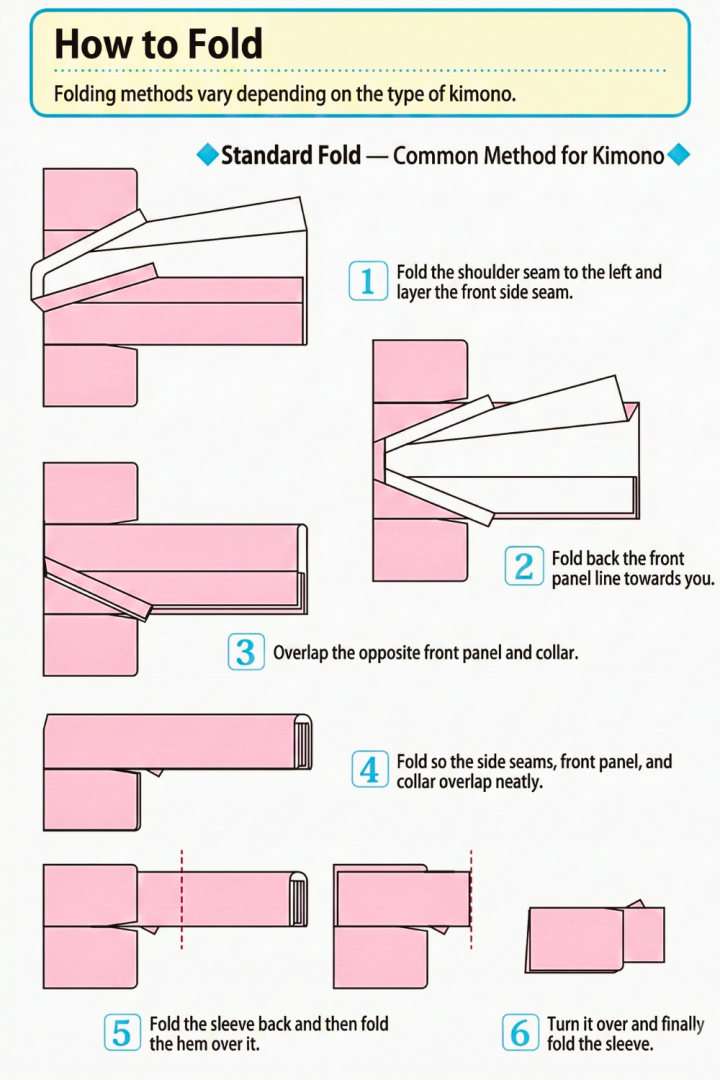
Haori: Remove any haori-himo → fold sleeves inward → fold the body in half vertically, then in thirds.
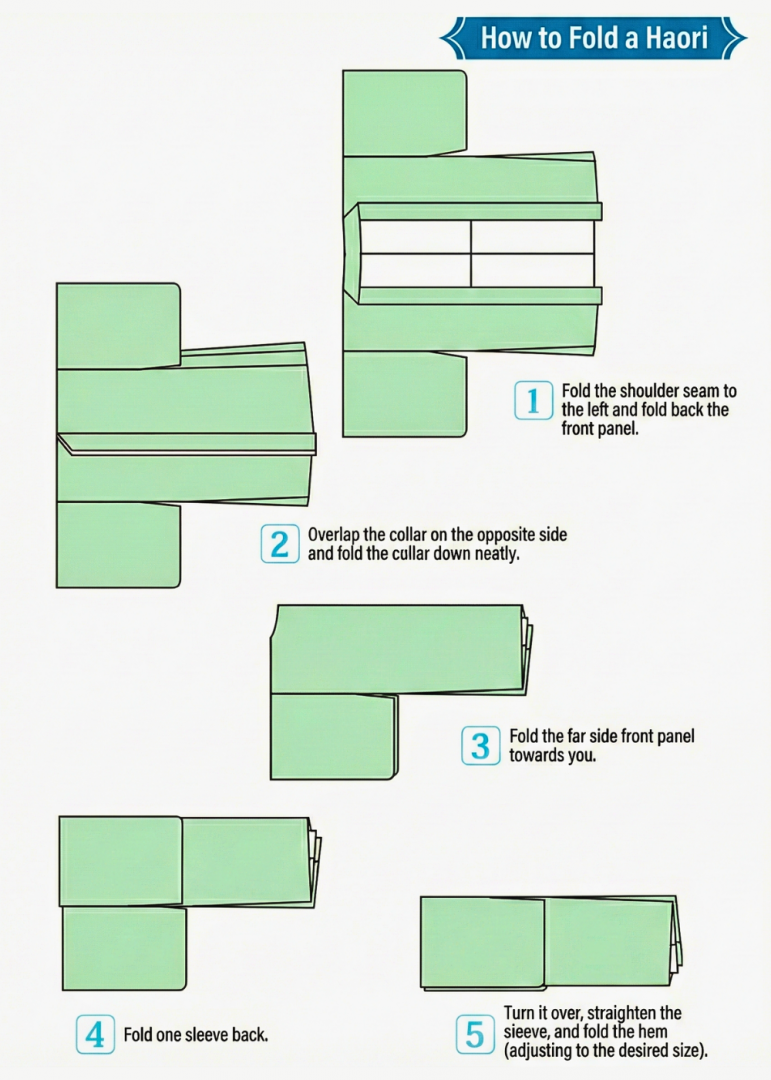
Tip: Place light tissue or washi paper between folds to reduce creases and color transfer.
B. Packing for the flight
- Use a packing cube or large zip bag to keep dust and moisture out; press air gently—don’t vacuum-compress.
- Keep away from liquids and sharp zippers; place a soft tee on top/bottom as a cushion.
- Add a small silica gel packet if you have one (not directly on the fabric).
C. First aid for minor issues
- Wrinkles: Hang in a steamy bathroom 10–15 minutes; or use a low-temp steamer from the wrong side at a distance.
- Spots: Don’t rub. Blot with a dry cloth and consult a cleaner experienced with kimono.
D. At-home care & storage
- Air out in shade for a few hours on a wide hanger; avoid direct sun.
- Store cool, dry, dark. Use cedar blocks or kimono-safe repellents; avoid strong mothballs that can yellow silk.
- Refold a few times a year to prevent permanent creases.
Travel note: If a store seals tax-free purchases, keep them sealed until you clear customs; ask staff how to re-fold once opened later.
8. Quick Checklist
Use this bite-size list right before you pay.
- Fit at shoulders & sleeve reach (yuki) — Raise your arms: does it pull? Haori should sit cleanly and move easily.
- Condition hot spots: Eri / Sode / Hem / Lining — Makeup at the collar, wear at cuffs, scuffs at hem, brittle silk inside.
- Fabric ID & care plan — Silk = luxe/fragile; Polyester = easy-care; Wool = warm but may felt.
- Purpose match — Wear now? → haori is easiest. Remake? → prioritize panel size & pattern placement.
- Price vs. value — Compare a few pieces in the same fabric/condition before deciding.
- Tax-free readiness — Threshold met? Passport on you? Purchases may be sealed.
- Color check — Step near the entrance/daylight if possible.
- Useful add-ons — Haorihimo, himo ties, simple garment bag, tissue/washi paper.
- Packing & aftercare — Ask staff to fold compactly and show you once; note a kimono-savvy cleaner.
Time-crunched? Choose a haori that matches at least three outfits you already own.
9. Wear the Memory. Embrace a New Style
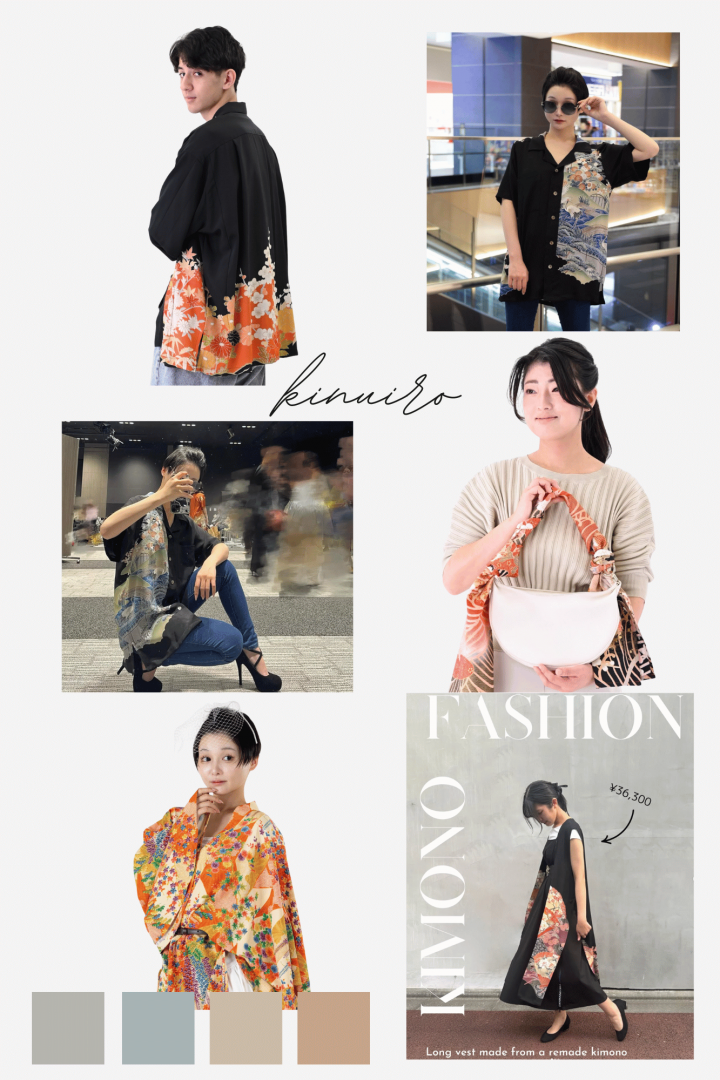
“Kinuiro(絹彩)” is an upcycled product—reborn as contemporary fashion items with free-thinking ideas, all while inheriting the memories held within kimonos and the essence of Japanese tradition.
The “Kinuiro” kimono upcycling project aims to give new life to unwanted kimonos, transforming them into unique fashion items like Aloha shirts and gowns, ensuring they are cherished until the very end.
The kimonos gathered from various regions are carefully sorted and processed at the Hiratsuka Logistics Center, which is about one-third the size of the Tokyo Dome. Even damaged or stained kimonos are utilized as fabric scraps or small accessories for handicrafts.
The upcycled “Kinuiro” items have gained popularity among foreign tourists as a symbol of Japanese culture, driven by the recent surge in inbound demand. Created with free-thinking ideas, breaking away from the fixed notion that “kimono equals formal,” these items are embraced by people across generations and cultures.
The “Mottainai BOX” was also created from the desire of “Tansu-ya” (Maruyama-Kyosai Group), a kimono specialty store with over half a century of history, to “cherish the memories held within kimonos without waste and pass them on.”
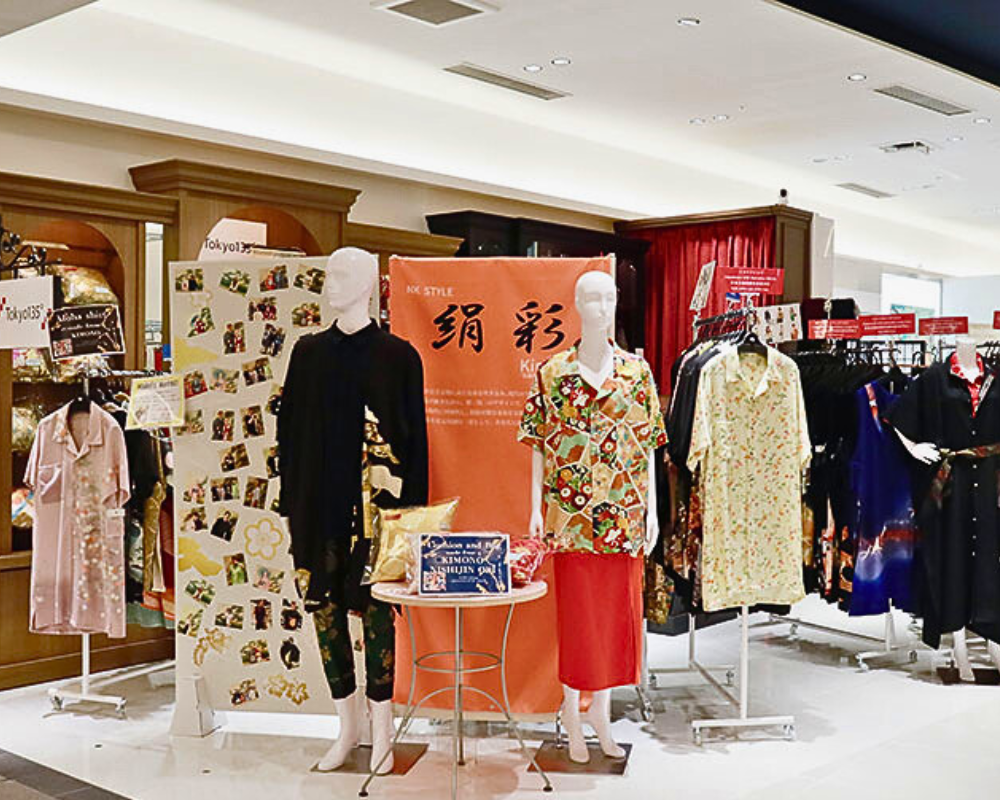
“KInuiro” products are available at the two stores frequented by foreign tourists: MEGA Tansu-ya Haneda Airport Garden Store and MEGA Tansu-ya Asakusa Store.
Ready for a treasure hunt?
Vintage kimono shopping is more than a transaction—it’s a doorway into Japanese craft, pattern, and history. Whether you wear a haori over your everyday clothes or take home silk panels for a creative project, you’ll return with a story only you can tell.
Visit Tansuya to browse curated racks of pre-loved kimono, haori, and obi. Show this screen to the staff—they’ll help you check sizing, condition, and folding, and point you toward tax-free procedures if you’re eligible.
📍 Find a Tansuya near you
MEGA Tsnsuya Haneda Airport Garden
247, Haneda Airport Garden 244 2-7-1 Haneda Kuko, Ota-ku
Tokyo 144-0041

MEGA Tsnsuya Asakusa
7F, Ekimise 1-4-1 Hanakawado Taito-ku
Tokyo 111-0033
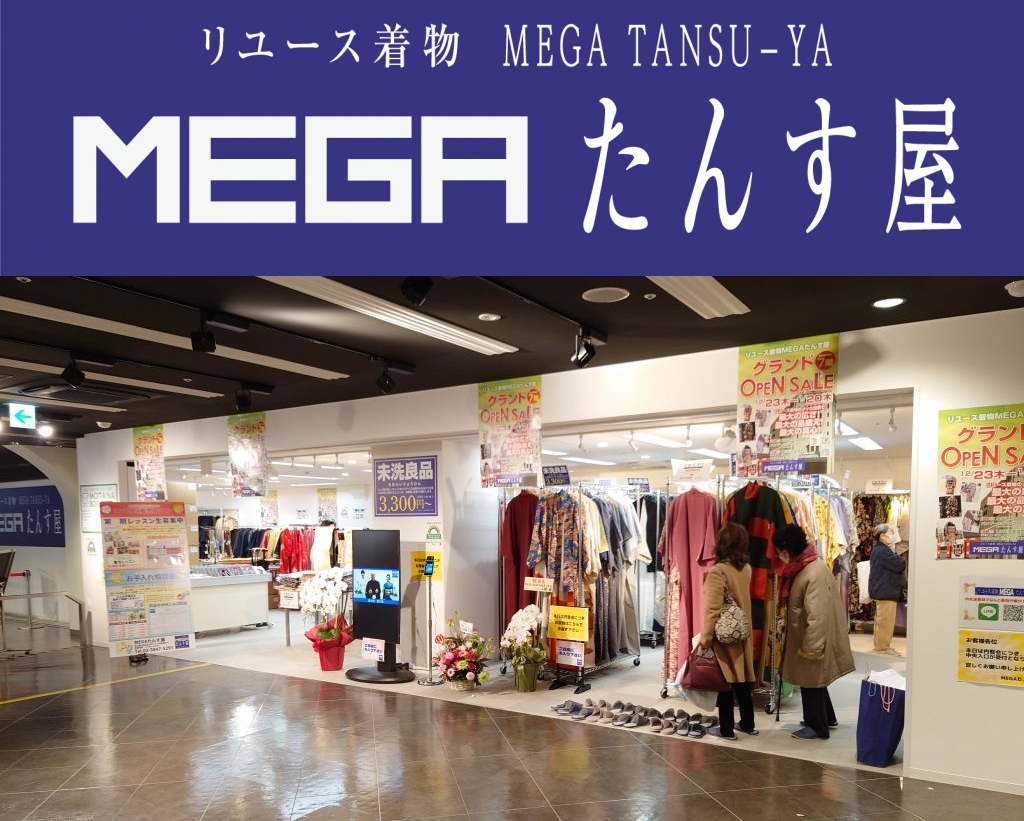
Tansuya Kyoto Avanti
31 Avanti 1F Higashikujō Nishiyamaō-chō, Minami Ward, Kyoto City,
Kyoto Prefecture 601-8003
Happy hunting—and enjoy the drape.

Discover the ultimate guide to finding your perfect vintage kimono, used kimono, in Japan! Whether you’re in Tokyo or Kyoto, this guide provides insider tips on how to choose, try on, and budget for a pre-loved kimono.

Imagine walking through ancient temples and historic streets in vibrant silk kimono or yukata. This real experience awaits you in Japan—not just a fantasy from your favorite anime.