
2025年08月13日
Vintage Kimono Guide: How to Find the Best Used Kimonos in Tokyo & Kyoto

Discover the ultimate guide to finding your perfect vintage kimono, used kimono, in Japan! Whether you’re in Tokyo or Kyoto, this guide provides insider tips on how to choose, try on, and budget for a pre-loved kimono.
Plus, learn how to keep shopping for these authentic and sustainable treasures even after you return home, thanks to Tansuya, Japan’s leading second-hand kimono chain with nationwide stores and a full online shop.

1) Why a “used kimono” is the best souvenir you can buy in Japan

If you love fashion, craft, or sustainable travel, a second-hand (a.k.a. “second-hund” or “vintage”) kimono is the ultimate take-home. Here’s why:
- Authentic craft, fair prices. Pre-loved kimono let you access real silk weaving and dyeing techniques—think Nishijin-ori brocades or hand-dyed florals—at a fraction of new-item prices.
- Sustainable & unique. Rewearing keeps exquisite textiles in circulation, and because many pieces were tailored for one owner, you’ll often find true one-offs.
- Wear now, style forever. A casual komon (small all-over pattern) with a simple obi works for sightseeing photos today, then becomes a statement jacket or dress-layer back home.
This guide shows you exactly how to choose, try on, and budget your purchase in Tokyo,Kyoto and across Japan, and—crucially—how to keep shopping even after you fly home via Tansuya, Japan’s leading second-hund-kimono chain with both nationwide stores and a full online shop. If you’re in Japan now, drop by a Tansuya near your itinerary; if you’re planning or already back home, browse the same inventory online.
Why Tansuya?
- Trust & selection: A specialist chain dedicated to second-hund kimono and obi, with careful inspection and a huge range—from everyday tsumugi to formal homongi. Check the store list to find locations along your route (Tokyo, Kyoto, Osaka, Fukuoka and more).
- Easy e-commerce: The Tansuya Online Store lets you filter by scene (formal/casual), size, and price band; domestic orders ship free over ¥3,980—perfect if you don’t want to carry extra luggage.
- Overseas-friendly checkout: Shopping from outside Japan? Tansuya now supports international delivery via the proxy service Buyee (the Buyee Cart appears when you access from overseas).
- Numerous stores in TokyoIn:Tokyo, numerous stores are conveniently located in major tourist-friendly areas such as Asakusa, Shinjuku, Aoyama, and Ginza.
Kyoto quick pick: walk-in convenience at Kyoto Station
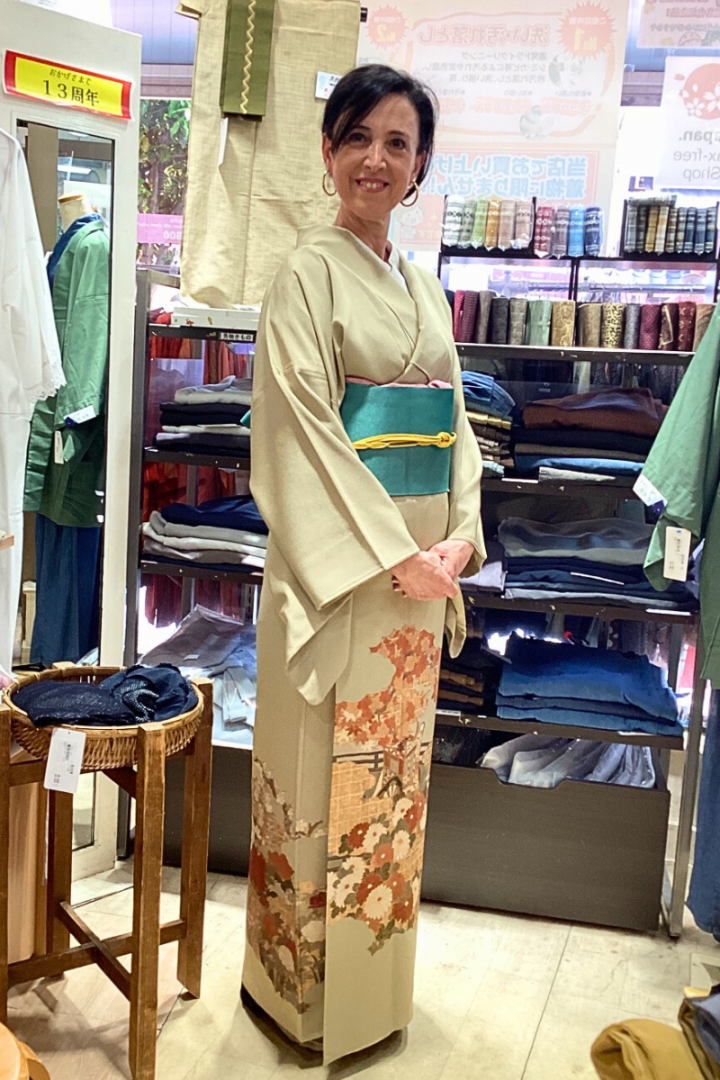
Landing in Kyoto with limited time? Tansuya Kyoto Avanti sits on the 1st floor of the AVANTI mall, a short walk from JR Kyoto Station (Hachijō Exit). It’s an easy first stop to try sizes, match an obi, and grab small accessories.
• Find your nearest Tansuya store (in Japan).
• Browse the Tansuya Online Store (domestic shipping / overseas via Buyee).
2) What is “Tansuya”? How to use the chain & site like a pro
Tansuya is Japan’s best-known reuse (second-hand) kimono specialist: a nationwide chain plus a full e-commerce site. Their core promise is simple—take kimono and obi that were sleeping in someone’s wardrobe, clean and finish them carefully, and put them back into happy circulation. That means pieces are inspected, washed, antibacterial-treated, and pressed before sale, so even first-timers can shop with confidence.
2.1 Why Tansuya works well for travelers
- Plenty of physical stores: You can slot a visit into your itinerary in Tokyo, Kyoto, Osaka, Fukuoka and more. (There’s even an airport location at Haneda Airport Garden—handy for last-minute treasure hunting.) Use the official Store List to search by region.
- Kyoto convenience: If you’re in Kyoto, the Tansuya Kyoto Avanti shop is on the 1F of the Avanti mall by JR Kyoto Station (Hachijō Exit)—ideal for a try-on before sightseeing. Hours listed: 10:00–21:00 (follows the mall’s closing days).
- Clear positioning: Tansuya focuses on second-hund kimono, obi, and accessories (plus some new items), so you won’t wade through unrelated fashion.
Quick planning move: Open the Store List, filter to the Kinki region, and you’ll see Kyoto Avanti alongside Osaka options like Namba Walk and Panjo Senboku—perfect for back-to-back city hops.
2.2 How to shop in-store (fast and stress-free)
- Tell staff your scene and budget. Say “casual kimono for walking around town, under ¥20,000,” or “semi-formal for a nice dinner.”
- Try size by yuki (sleeve-to-center-back) and length. Staff will pull options; most second-hund kimono are one-off, so be flexible on color if the fit is perfect.
- Match an obi, then add smalls. A simple Nagoya obi for casual, Fukuro obi for dressier looks; add an obiage and obijime for polish.
- Ask about basic care. How to fold into a tatōshi (protective paper sleeve), how often to air the garment, and what “full wash” means for silk.
- Payment & packing. If you’ll keep sightseeing, ask for compact packing; most stores can bundle neatly.
(Tip: Don’t worry if you can’t tie an obi yet—many travelers wear the kimono as a coat or style the obi as a sash back home.)
2.3 Mastering the
Tansuya Online Store
Even if you’re in Japan, shopping online can save luggage space; you can ship to your hotel or a friend—and domestic shipping becomes free from ¥3,980. Here’s a quick how-to:
- Filter by “SCENE”: Formal vs Casual narrows results instantly.
- Filter by “PRICE BAND.” Pre-set ranges (e.g., up to ¥5,000 / ¥5,001–10,000 / ¥10,001–20,000 / ¥20,001–50,000 / …) make budgeting painless.
- Filter by “SIZE.” Choose SS–S / S–M / M–L / L–LL / LL– / TALL to target workable fits quickly.
- Browse by item type. Komon, Tsumugi, Iromuji, Homongi, Yukata, summer items, plus Obi categories.
A 5-minute search recipe (example):
SCENE = Casual → PRICE = ¥10,001–20,000 → SIZE = M–L → ITEM = Komon → sort by “New arrivals.” You’ll usually surface clean, photogenic options fast.
Domestic shipping note: As of now, orders ≥ ¥3,980 (tax-in) ship free within Japan; below that, standard domestic rates apply. Always re-check the shipping page before checkout in case thresholds change.
2.4 Shopping from overseas (or after you fly home)
Tansuya supports international customers via Buyee, a proxy checkout that appears when you access the site from outside Japan. Buyee handles multi-language support, overseas payment methods, and delivery to 114 countries/regions.
How it works (simple version):
- Access the Tansuya site from abroad → you’ll see a Buyee Cart.
- Add items and proceed via Buyee.
- Pay the item price + domestic shipping (if any) + Buyee service fee (¥300 per order) + international shipping; choose a method/speed that suits your budget.
(Heads-up: Import taxes/duties depend on your country; Buyee shows estimates at checkout.)
2.5 Jargon, decoded (30-second glossary)
- Komon (小紋:こもん): Casual kimono with an all-over small pattern—great for city walks and photos.
- Tsumugi (紬:つむぎ): Nubby, hand-loomed look; everyday chic.
- Iromuji (色無地:いろむじ): Solid-colored kimono; can dress up or down with the obi.
- Homongi (訪問着:ほうもんぎ): Semi-formal with flowing patterns over seams; good for special dinners, some ceremonies.
- Nagoya / Fukuro obi: Everyday vs dressier belt types; the latter is longer and often brocaded.
- Tatōshi (たとう紙): Traditional protective paper wrapper for kimono.

3) How to choose a used kimono: the 5-point checklist (table edition)
3.1 Decide your purpose (TPO) first
| Occasion (TPO) | Best Kimono Types | Obi Choice | Why It Works | Re-wear Back Home |
| Sightseeing / street style | Komon, Tsumugi, Yukata (summer) | Nagoya / simple Hanhaba | Easy to walk, photogenic patterns | Layer as a coat or over a dress |
| Smart casual / dinner | Iromuji (solid color) | Polished Nagoya | Dresses up or down with obi | Works as minimalist outerwear |
| Semi-formal / photo shoot | Homongi | Fukuro (brocaded) | Elegant drape & sheen | Special events, styled shoots |
| Menswear (all scenes) | Solid or subtle-weave kimono | Kaku obi (men’s) | Clean, modern silhouette | Layers well with Western pieces |
3.2 Size: what to measure & how it should feel
| Measurement | Japanese term | How to measure | Target fit | Quick fit test |
| Sleeve-to-center-back | Yuki (裄:ゆき) | Neck bone → wrist bone (arm relaxed) | Your number ± ~1 cm | Hug yourself; sleeves shouldn’t pull tight |
| Length | Mitake (身丈:みたけ) | Shoulder to hem (garment), compared to your height | Women: kimono ≈ your height or a bit longer (for waist fold ohashori) / Men: near ankle length (no waist fold) | Sit/stand comfortably; hem not dragging |
Pro tip: If you’re between sizes online, choose the slightly longer yuki—comfort beats exact color.
3.3 Fabric & season at a glance
| Fabric | Japanese | Seasonality | Look & care | Beginner-friendly? |
| Silk | 絹(きぬ) | Year-round (lined for cool seasons) | Luxe drape; gentle care | ★★★☆ |
| Wool | ウール | Autumn–winter | Warm, springy; dry clean | ★★★☆ |
| Polyester (synthetic) | 化繊(かせん) | All seasons (many are washable) | Travel-proof; rain friendly | ★★★★ |
| Cotton (Yukata) | 綿(めん) | Summer | Unlined, breezy | ★★★★ |
| Gauzy summer silks | 絽 / 紗 (ろ:Ro/しゃ:Sha) | Hot weather | Breathable, sheer | ★★★☆ |
Lining terms: Awase・袷 (lined) = cool/cold seasons, Hitoe・単衣 (unlined) = early summer/early autumn.
3.4 Condition: 60-second inspection map
| Area to check | What to look for | Fixability |
| Collar (衿、えり) & back of neck | Makeup/yellowing, hair-product stains | Minor discoloration OK; heavy yellowing is hard |
| Underarms | Perspiration marks | Light marks may clean; deep stains persist |
| Front panels (おくみ) | Tiny spots visible in photos | Choose cleaner pieces for photo days |
| Hem (裾、すそ) | Scuffs/dust | Often cleanable |
| Sleeve cuffs & tips | Fray/wear | Minor is fine |
| Side seams / center back | Pulled stitches, stress lines | Tailor can reinforce |
| Lining (八掛・胴裏、はっかけ・どううら) | Spots, brittle silk | Brittle lining is costly to replace |
| Overall smell | Musty vs mildew | Musty airs out; mildew is a red flag |
3.5 Price sense (typical ranges you’ll see at large second-hund chains)
| Item | Everyday good finds | Higher-grade / formal |
| Komon(小紋) / Tsumugi・紬 (casual kimono) | ¥5,000–¥20,000 | ¥20,000–¥40,000+ |
| Iromuji(訪問着) / Homongi(訪問着) | ¥15,000–¥30,000 | ¥30,000–¥50,000+ |
| Obi (帯)— Nagoya(名古屋) | ¥3,000–¥10,000 | ¥10,000–¥20,000 |
| Obi — Fukuro (formal) | ¥5,000–¥20,000 | ¥20,000–¥40,000+ |
| Yukata(浴衣) | ¥3,000–¥8,000 | ¥8,000–¥15,000 |
| Haori (羽織・kimono jacket) | ¥3,000–¥10,000 | ¥10,000–¥20,000 |
Set-building tip: buy a versatile kimono first, then an obi that matches 2–3 looks. Add haneri (collar), obijime (cord), obiage (scarf) for instant polish.
3.6 One-minute filter recipe (for the Tansuya Online Store)
| Step | Filter | Example |
| 1 | SCENE | Casual |
| 2 | PRICE BAND | ¥10,001–¥20,000 |
| 3 | SIZE | M–L (or your yuki-friendly band) |
| 4 | ITEM | Komon (then sort by “New arrivals”) |
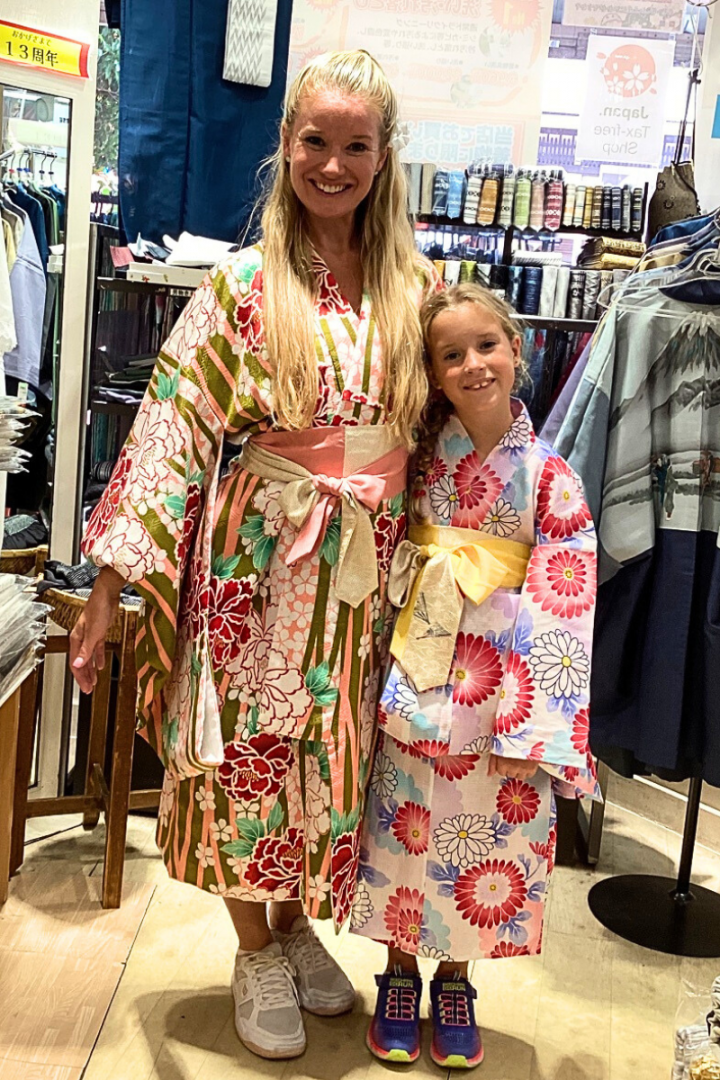
4) Tokyo first — the smartest places to buy (before Kyoto)
Here’s your Tokyo cheat sheet: start with the two MEGA Tansuya flagships for sheer scale, then mix in a few neighborhood stars for different vibes and schedules. (Kyoto Avanti will follow as the next chapter.)
4.1 The two “MEGA Tansuya” flagships (huge floors, easy access)
MEGA Tansuya Asakusa (EKIMISE 7F) — 10:00–20:00, daily
Why go: one of Japan’s largest second-hund kimono floors; thousands of items and 10+ themed corners. Direct access from Tobu Asakusa Station; Ginza Line Asakusa Sta. Exit 7 = 1 min; Toei Asakusa Line A5 = 3 mins. Great first stop if you’re sightseeing around Senso-ji.
MEGA Tansuya Haneda Airport Garden (T3, 2F) — 10:00–20:00, daily
Why go: “airport-easy” mega store connected to Haneda T3 Station (Monorail & Keikyu). Perfect for last-minute try-ons, gift haori, or shipping straight home; photo booth corner appears at this branch, too.
Quick win: If you’ll tour Asakusa anyway, do Asakusa MEGA first; if you’re landing/leaving via Haneda, slot the airport MEGA into your arrival or departure window.
4.2 Other Tokyo picks (compact, curated, super convenient)
- Shinjuku Subnade — 10:30–20:30; follows mall calendar
Underground shopping street right below the action; easy to duck in between trains and dinner. Popular for Nagoya obi and quick styling help. - Higashi-Ginza (Old & New) — 11:00–19:00 (Sun/hol 〜18:00); closed Wed
A few minutes from Kabukiza—ideal if you’re in the theatre area and want semi-formal pieces or solid basics. - Jiyugaoka — 10:30–18:30; closed Wed
Boutique feel in a fashion-forward neighborhood; strong on accessories and beginner lessons. 1 min from Jiyugaoka Station (Jiyugaoka Dept. 1F). - Kichijoji Ekimae — 11:00–19:00; daily
Steps from Kichijoji Station (North Exit)—pair shopping with a stroll in Inokashira Park; good everyday selection. - Asakusa Kokaido-mae — 10:00–18:00; daily
Street-level stop on lively Orange Street, right by Asakusa Public Hall; handy if you prefer ground-floor browsing.
Need more options (Aoyama, Nakameguro, North-east Tokyo, etc.)? Open the official store list and filter by “Tokyo.”
4.3 One-look comparison (save this)
| Store | Neighborhood vibe | Typical hours* | Best for |
| MEGA Asakusa (EKIMISE) | Sightseeing hub / big floor | 10:00–20:00 | Massive choice, quick full looks |
| MEGA Haneda (T3) | Airport-easy, direct station link (Haneda Airport Garden) | 10:00–20:00 | Arrival/departure shopping, gifts |
| Shinjuku Subnade | Central, rain-proof underground mall | 10:30–20:30 | Commuter-friendly try-ons |
| Higashi-Ginza | Theatre/Kabukiza area | 11:00–19:00 (Sun/hol 〜18:00) | Semi-formal, classic palettes |
| Jiyugaoka | Boutique & accessory heaven | 10:30–18:30 | Polishing a look, lessons |
| Kichijoji Ekimae | Park + café strolls | 11:00–19:00 | Wearable casual sets |
| Asakusa Kokaido-mae | Street-level Asakusa | 10:00–18:00 | Fast browse near Senso-ji |
*Hours as posted on the official pages as of Aug 12, 2025; malls may alter holiday schedules—tap the branch page before you go.
4.4 How to use Tokyo stores like a pro (2 moves)
- Tell staff your scene + budget (“casual under ¥20,000” / “semi-formal for dinner”); they’ll pull size-correct racks first.
- Try once in Tokyo, expand online: lock your yuki (sleeve-to-center-back) and length, then continue on the Tansuya Online Store or ship to your hotel if luggage is tight.
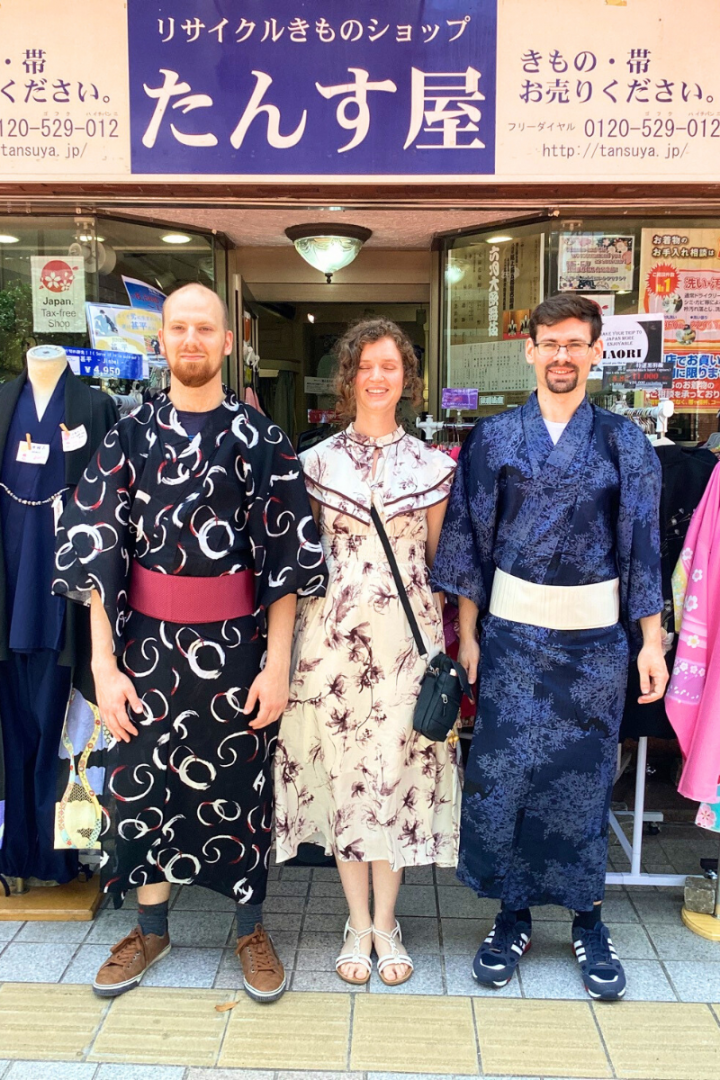
5) Kyoto vintage kimono shop — how to shop
Tansuya Kyoto Avanti
The shortcut: Head to Kyoto Avanti (1F) right by JR Kyoto Station (Hachijō Exit), then go straight to Tansuya on the first floor (next to ABC-MART). Open hours are typically 10:00–21:00 and follow the mall’s schedule.
Getting there (2–3 minutes from the station)
- JR Kyoto Station: exit Hachijō (south) side and cross to Kyoto Avanti.
- Subway Karasuma Line: Kyoto Station → 1 min on foot.
- Kintetsu Kyoto: 3 mins on foot.
These walking times are posted on the shop’s official page, which also confirms the 1F location.
When to go
- Weekday mornings (10:00–11:00) are calm for trying sizes.
- Rainy days are perfect—everything is indoors, and you can combine it with lunch in the mall. Kyoto Avanti is a full shopping center on the south side of Kyoto Station with restaurants and daily-use shops.
What to bring
- A slim T-shirt or camisole (for try-on comfort).
- Your yuki note (neck-to-wrist) from Chapter 3.
- Phone photos of colors/patterns you love (staff can pull similar pieces fast).
How to shop the floor efficiently
- Tell staff your scene & budget (e.g., “casual under ¥20,000”).
- Size first: try for a comfortable yuki (sleeve-to-center-back), then check length.
- Match an obi: start with a simple Nagoya obi; if you need semi-formal, ask for Fukuro obi options.
- Add smalls (obiage/obijime/haneri) for color pop; the store keeps a wide selection of accessories on hand.
- Pack & go: ask for a tatōshi (protective paper wrap) and compact packing for sightseeing.
“15-minute Kyoto set” (copy this flow)
- Pull 1 casual komon or tsumugi + 1 Nagoya obi → quick mirror check.
- Add one bright obijime for photos.
- Grab a haori (kimono jacket) if it’s breezy; it layers well over Western outfits later.
- Pay, then enjoy temple-hopping—your outfit is ready.
Nice-to-have extras right in the same mall
You can make it a one-stop errand: Don Quijote Kyoto Avanti (tax-free variety store) is in the building—handy for travel odds and ends before/after kimono shopping.
Quick facts (bookmark)
- Name: Tansuya Kyoto Avanti
- Where: Kyoto Avanti 1F (beside ABC-MART)
- Hours: 10:00–21:00; follows mall’s closed days
- Nearest station exit: JR Kyoto Hachijō (south) side
- Store list & other branches: see Tansuya’s official directory
Sources: official shop page & Avanti floor guide.
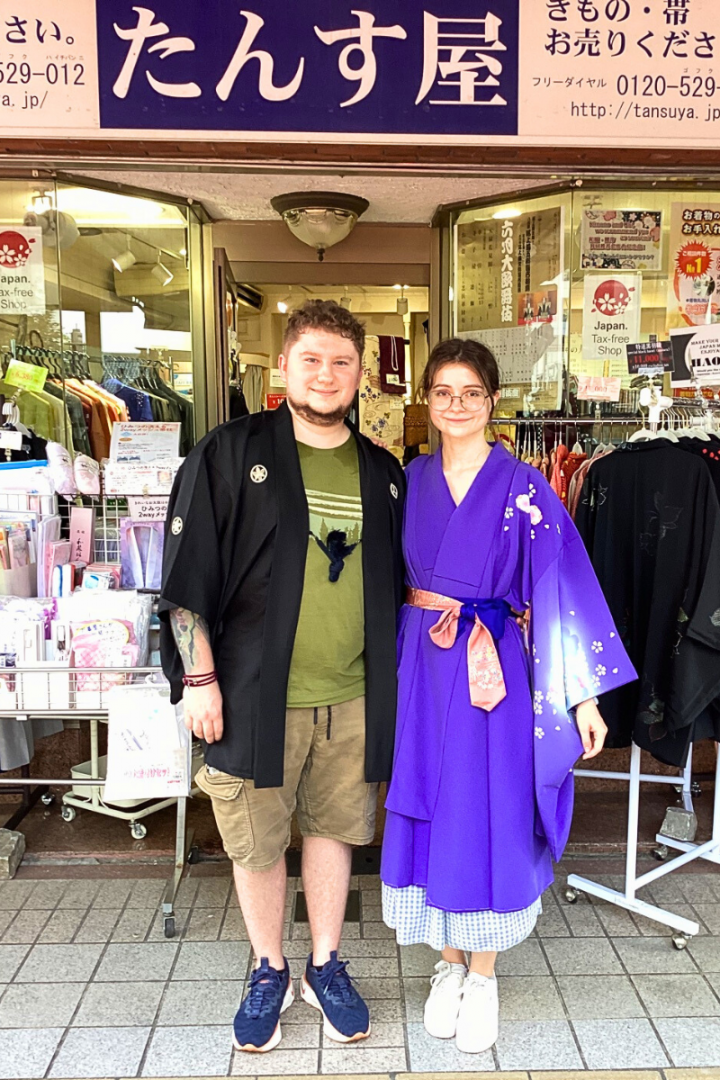
6) No time or suitcase space? Shop Tansuya online (domestic & overseas)
Whether you’re still in Japan or already back home, Tansuya Online Store makes second-hand kimono shopping simple. Here’s the fast, traveler-friendly playbook.
6.1 In Japan: how to use the Online Store efficiently
- Start with filters: on the top page you can narrow by
SCENE (Formal / Casual), PRICE BAND (e.g., up to ¥5,000; ¥5,001–10,000; ¥10,001–20,000… up to ¥80,001+),
SIZE (SS–S / S–M / M–L / L–LL / LL– / TALL),
and then browse by
ITEM (Komon, Tsumugi, Iromuji, Homongi, Yukata, summer items, Obi, etc.).
This replicates the in-store flow and quickly surfaces wearable options. - Domestic shipping: orders ¥3,980 (tax-in) and up ship free within Japan; under that threshold the standard shipping fee listed is ¥550 (tax-in).
Always re-check the current policy on the Terms/Guide pages before paying. - Hotel delivery tip: many hotels accept parcels for guests—add your reservation name + check-in date to the address notes and confirm with your hotel. (Delivery times depend on the courier chosen at checkout.)
One-minute search recipe (copy & paste):
SCENE = Casual → PRICE = ¥10,001–20,000 → SIZE = M–L → ITEM = Komon → sort by New arrivals. You’ll find clean, photogenic pieces fast.
6.2 Shopping from overseas: Tansuya × Buyee (proxy cart)
Accessing Tansuya from outside Japan? A Buyee Cart appears on partner brand sites so you can order internationally without a Japanese address or card. Checkout bundles the item price + any domestic shipping + Buyee service fee + international shipping to your country.
- Service fee (Buyee): currently ¥300 per order (flat). Additional plan options are available; see Buyee’s guide for details and the latest fees. Import tax/duty, if any, is calculated per your country.
- How to use: visit the Tansuya site from abroad → add to cart (Buyee Cart UI) → choose shipping method & pay. The cart flow explains fees before you confirm.
Fast check before you buy
- Size band: match SS–S / S–M / … to your yuki (sleeve-to-center-back) from Chapter 3.
- Condition rank: Tansuya articles explain common grading (S / A / B / C) and how to read product pages—handy when you can’t see the garment in person.
6.3 Three ready-made filter sets (you can tweak)
- Under ¥10,000 (souvenir + layering): SCENE Casual → PRICE ¥5,001–10,000 → ITEM Komon or Haori → SIZE to fit.
- Photo-perfect ¥20,000–30,000: SCENE Formal → PRICE ¥20,001–50,000 → ITEM Iromuji or Homongi → add Fukuro obi.
- Rain-proof beginner set: SCENE Casual → ITEM Polyester Komon + Nagoya obi (poly options are durable and travel-friendly).
6.4 Quick FAQ for online buyers
- Can I mix in new items? Yes—Tansuya also lists select new products alongside second-hund stock; filters keep things tidy.
- What if my budget is tight? Use PRICE BAND and sort by New arrivals—good pieces move quickly at large chains.
- Will I get the same help as in store? The Guide/FAQ and product descriptions (with condition notes) are designed to compensate for not trying on; if you’re unsure on size, err on a slightly longer yuki for comfort.
• Open the Tansuya Online Store (filters: Scene / Price / Size / Item).
• Check shipping & fees before checkout (free over ¥3,980 (tax-in) in Japan; otherwise ¥550; other fees per chosen method).
• Shopping from abroad? Use the Buyee Cart (see fee breakdown and plans here).
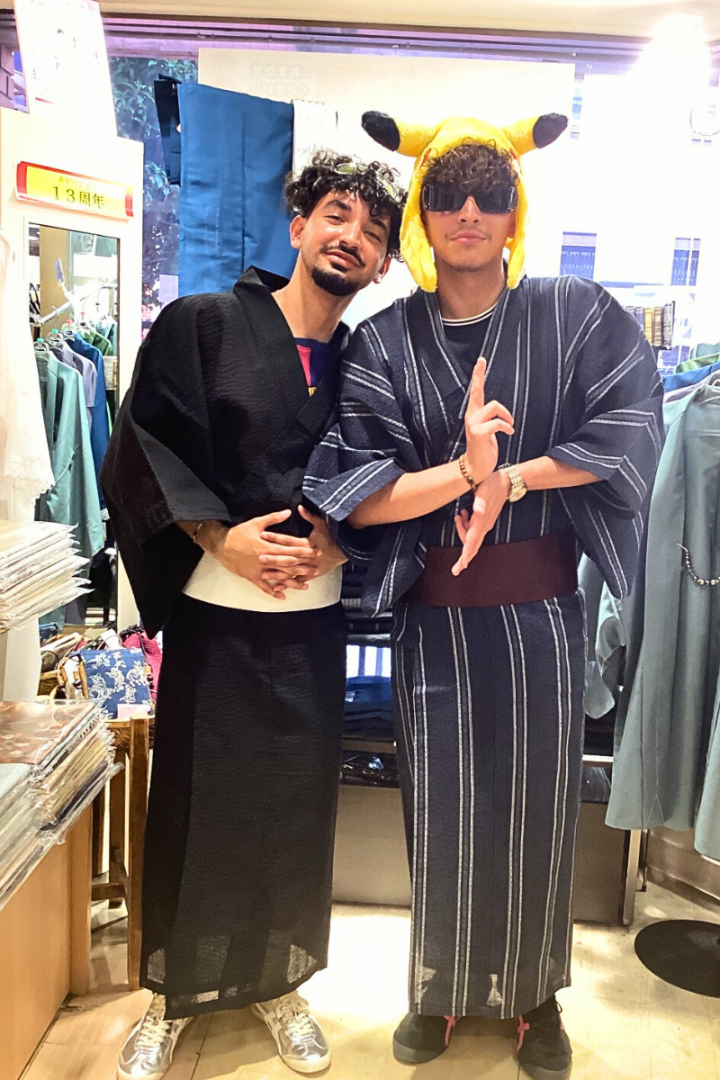
7) Add-ons for travelers: rentals, photo ideas, and tax-free basics (skim-friendly)
7.1 Fast decision map — rent vs buy vs EC
| You want… | Best move | Why | Next step |
| Zero prep, just photos today | Rent near Kyoto Station | Quick dressing help, hair options | Search “Kyoto Station kimono rental”; e.g., popular shops around the station offer same-day sets. |
| A souvenir you’ll re-wear | Buy used at Tansuya | Tried-and-true chain, inspected items, wide price bands | Drop into Tansuya Kyoto Avanti (1F) or another branch from the store list. |
| No suitcase space / leaving soon | Order from Tansuya Online | Ship to hotel/domestic addr. (free ≥ ¥3,980); overseas via Buyee | Check shipping & fees; Buyee supports 114 regions, adds a small service fee. |
7.2 Kyoto photo formula (copy these combos)
- Fushimi Inari (vermillion gates) → deep indigo komon + white obijime (contrast pops).
- Kiyomizu slope (warm stone) → earth-tone tsumugi + copper/bronze obi.
- Arashiyama bamboo → solid iromuji in pale green + minimal accessories.
- Gion/Shirakawa → vintage floral komon + retro haori for depth.
- Ponto-chō at dusk → black or jewel-tone iromuji + metallic fukuro obi.
Speed tip: At Tansuya Kyoto Avanti, tell staff your scene (temple walk / evening photos) and budget—they’ll pull ready-to-shoot sets.
7.3 Tax-free shopping in Japan — what matters
today (Aug 12, 2025)
Current system (point-of-sale exemption):
- Show your passport at a Tax-free Shop; eligible tourists get 10% consumption tax removed at checkout. Minimum spend ¥5,000+ (pre-tax) at the same store on the same day. Consumables have a ¥500,000 cap and must be sealed until you leave Japan.
- Japan’s consumption tax rate is 10% (8% on some food items).
- From Apr 1, 2025, shipping receipts can no longer prove eligibility—don’t mail tax-free items home yourself to claim exemption. Be ready to show items at customs if asked.
Announced change ahead (for your calendar):
Japan will switch to a refund-based system on Nov 1, 2026 (you’ll pay tax at purchase, then claim a refund before departure). Details are set by government notices; plan on extra airport time once this begins.
Reality check from retailers: Major chains (e.g., Don Quijote) still state ¥5,000+ per store/day and sealed packaging rules for consumables—use this as your working expectation in 2025.
7.4 30-second tax-free checklist (show this at the register)
- ✅ Passport (original), not a copy.
- ✅ One-store, one-day total ≥ ¥5,000 (pre-tax).
- ✅ If buying consumables, agree to tamper-evident sealing and don’t open in Japan.
- ✅ Keep receipts with your passport; be ready to show items at departure if requested.
7.5 Make it easy: Tansuya-first plan
- Pop in: Tansuya Kyoto Avanti (1F, Kyoto Station south/Hachijō exit), 10:00–21:00. Quick try-ons, accessories on hand.
- Buy & roam: Ask for compact packing (tatōshi).
- Ship instead: Order on the Tansuya Online Store—free domestic shipping ≥ ¥3,980; ¥550 below.
- Already back home? Use the Buyee Cart on Tansuya’s site (shows from overseas); Buyee fee currently ¥300/order, plus international shipping.
Bonus errand: Need travel bits after your kimono stop? Don Quijote Kyoto Avanti is in the same building, right by the station’s Hachijō exit.
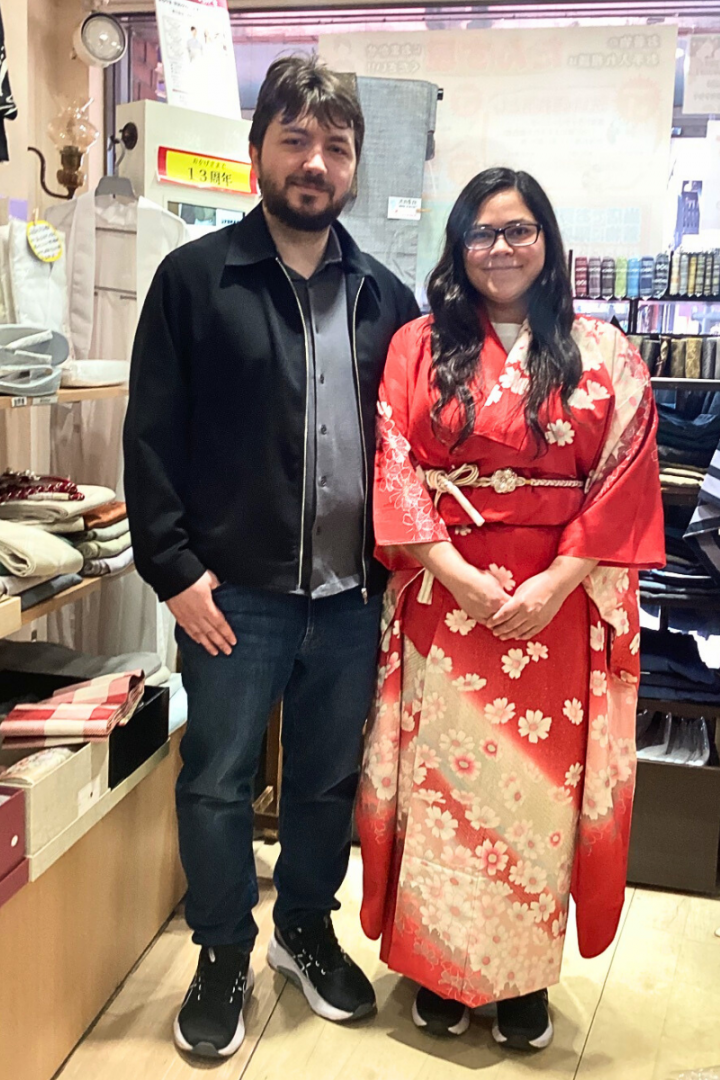
8) Budget models — real example outfits at
These are practical, mix-and-match “cart recipes” you can use in a Tansuya store or on the Tansuya Online Store. Prices are ballpark for second-hund items; exact totals vary by piece and condition.
8.1 Snapshot comparison
| Budget | Core look | What’s included | Where it shines | How it re-wears at home |
| ¥10,000 class | Casual komon/tsumugi + simple Nagoya obi | Kimono + Obi (+ optional used haneri or obijime if budget allows) | Street style, café hopping, temple strolls | Kimono-as-coat over T-shirt/jeans |
| ¥30,000 class | Photo-ready iromuji/homongi + nicer Nagoya or entry Fukuro obi + 1–2 accessories | Kimono + Obi + obijime (+ obiage) | Photoshoots, dinner, theatre | Dress-up events; separates into coat & belt |
| ¥50,000 class | Semi-formal homongi (or high-grade tsumugi) + quality Fukuro obi + full accessory set | Kimono + Obi + obijime + obiage + haneri | Special dinners, receptions | Long-term collection piece |
8.2 Model A —
¥10,000 Casual City Set
(speedy & suitcase-light)
Goal: photogenic, comfortable, easy to style with sneakers or ankle boots.
Women’s cart recipe
- Kimono: Casual komon or tsumugi (poly or wool OK) — target: ¥6,000–8,000
- Obi: Simple Nagoya or hanhaba — target: ¥2,000–4,000
- (Optional) Obijime for color pop — target: ¥800–1,500
Men’s cart recipe
- Kimono: Solid/dark weave — target: ¥6,000–8,000
- Obi: Kaku obi — target: ¥2,000–3,000
- (Optional) Haori himo cords if adding a haori later — target: ¥800–1,200
Colorways that always work
- Indigo or charcoal kimono + ecru/white obi accent
- Earth-tone (olive, rust, cocoa) + cream line in the obijime
Online filter shortcut → SCENE Casual → PRICE ¥5,001–10,000 → SIZE to fit → ITEM Komon (sort New arrivals)
8.3 Model B —
¥30,000 Photo-Perfect Set
(balanced polish)
Goal: elegant in photos, still wearable after the trip.
Women’s cart recipe
- Kimono: Iromuji (solid tone) or soft-pattern homongi — target: ¥15,000–22,000
- Obi: Polished Nagoya or light Fukuro — target: ¥8,000–12,000
- Accessories: Obijime (+ obiage if budget allows) — target: ¥2,000–4,000
Men’s cart recipe
- Kimono: Fine-weave solid — target: ¥12,000–18,000
- Obi: Higher-grade kaku obi — target: ¥4,000–6,000
- Add: Haori (if you see a deal) — target: ¥6,000–10,000
Colorways that photograph beautifully
- Dusty pink / pale jade / ink black iromuji + gold-beige obi
- Navy kimono + oxblood obijime for a modern accent
Online filter shortcut → SCENE Formal → PRICE ¥20,001–50,000 → SIZE → ITEM Iromuji / Homongi
8.4 Model C —
¥50,000 Semi-Formal Set
(forever piece)
Goal: a refined set you can wear to nice dinners, recitals, or semi-formal receptions.
Women’s cart recipe
- Kimono: Homongi with graceful flowing motif — target: ¥28,000–38,000
- Obi: Quality Fukuro (Nishijin-style brocade if you love shine) — target: ¥15,000–22,000
- Accessories (full set): Obijime + Obiage + Haneri — target: ¥4,000–8,000
Men’s cart recipe
- Kimono: High-grade plain weave (silk) — target: ¥25,000–35,000
- Obi: Elegant kaku obi — target: ¥6,000–8,000
- Accessories: Subtle haori (optional) — target: ¥10,000–15,000
Colorways that always look rich
- Deep bottle green / garnet / midnight + champagne or pewter obi
- Pattern restraint on kimono; let the Fukuro obi carry the glamour
Online filter shortcut → SCENE Formal → PRICE ¥20,001–50,000 (and above if needed) → SIZE → ITEM Homongi + Fukuro obi
8.5 Swap list (if your size or stock is tricky)
- If yuki is tight → try a different size band (S–M / M–L / L–LL / TALL) or switch to poly (often cut slightly roomier).
- If obi prices push you over budget → choose a Nagoya now and upgrade to Fukuro later.
- If you run hot/cold → pick unlined (hitoe) for warmer months or lined (awase) for cooler seasons.
8.6 Re-wear ideas back home (maximize mileage)
- Kimono as coat over tees, turtlenecks, or slip dresses; belt with a leather sash if not using an obi.
- Obi as statement belt on a coat/dress, or framed as wall art.
- Haori as jacket with denim or tailored trousers.
8.7 Fast in-store script (copy & show to staff)
“I’m looking for a [budget] set for [casual / dinner / semi-formal].
My yuki(裄) is about [xx cm]. Could I try [komon / iromuji / homongi] with a [Nagoya / Fukuro] obi in [preferred colors]?”
9) Care, packing, and bringing it home (tatōshi, cleaning, alterations)
9.1 One-page care map — what to do by fabric
| Fabric | After-wear care | If lightly soiled | If stained | Deep clean |
| Silk | Air in shade 1–2 days; refold to move creases | Blot with cool water only; avoid rubbing | Ask for shiminuki (professional stain removal) | Consider arai-hari (traditional disassemble-wash-resew) via a kimono specialist; it’s the gold-standard and pricey. |
| Polyester | Air in shade | Gentle hand-wash; pH-neutral soap; no wringing; drip-dry | Spot test first; if unsure, pro clean | Normal dry-clean is often OK (check label). |
| Cotton (yukata) | Air in shade | Gentle wash (30°C / 86°F), reshape, dry flat/shade | Spot treat carefully; avoid bleach | Machine gentle or hand-wash, then press on low. |
| Wool | Air in shade | Light brush; avoid water | Pro stain removal | Dry-clean only. (Wool felts easily.) |
Terms you’ll hear: shiminuki(シミ抜き) = stain removal;
arai-hari (洗い張り)= the traditional “take apart → wash panels → resew” method.
9.2 Storing kimono correctly (home or hotel)
- Wrap each kimono in a tatōshi — a large washi paper envelope that breathes and protects. Many kimono shops use these; you can also buy them (standard ~84.5×36.5 cm). Replace when stained/damp.
- Keep cool, dry, dark. Sunlight fades dyes and heat/humidity encourage mold; check humidity regularly if you live in a damp climate. Avoid long-term hanging (can stress shoulders). Cedar blocks/sachets help with moths.
Fast fold + wrap (hotel-room friendly)
- Lay kimono face-down, align side seams and sleeves.
- Fold sleeves across the body; fold hem up (two-fold or three-fold).
- Slide into tatōshi, close flaps, tie strings. For a visual, see museum fold demos.
9.3 Packing for the flight (wrinkle-smart)
- Use tissue (or tatōshi) as a “glide layer.” Place sheets between folds to reduce friction and hard creases; keep weight off the bundle.
- Roll light pieces, lay heavy flat. Haori can roll; silk kimono prefer gentle, wide folds. Pack cubes lightly; don’t compress. Hang and steam in a hot shower on arrival.
- Emergency refresh: mist lightly with water, smooth by hand, air in shade.
9.4 Alterations & repairs—what’s realistic with vintage
- Good news: in traditional wasai (kimono tailoring), fabric isn’t cut away; excess is hidden in seam allowances, so pieces can be unsewn and resewn—one reason vintage kimono last. (Skilled hands required.)
- Common tweaks:
- Yuki (裄) sleeve-to-center-back let-out/bring-in—depends on how much seam allowance your piece has.
- Length adjustments (women): handled by waist fold (ohashori); major re-proportioning is possible but best left to pros.
- Hems/lining repairs and seam reinforcements are routine wasai tasks.
- Yuki (裄) sleeve-to-center-back let-out/bring-in—depends on how much seam allowance your piece has.
- Cleaning + repair menu (you may hear): maru-arai (whole-garment clean as-is), shiminuki (stain work), kakehagi (invisible mending). For delicate or valuable silk, ask a kimono cleaner—not a generic dry cleaner.
9.5 Quick “what not to do”
- Don’t hang silk kimono for long-term storage. It stresses shoulders; fold and use tatōshi.
- Don’t use bleach/harsh detergents on silk; avoid hot irons—start low, press cloth only.
- Don’t store in plastic bags (no breathability; moisture traps). Prefer breathable paper.
9.6 What to ask at a Tansuya
counter (copy this)
“Could you pack this in a tatōshi for travel? Also, which care would you recommend—basic cleaning or shiminuki only? If I need deep cleaning later, do you partner with arai-hari specialists?”
9.7 Bring-home checklist (10 seconds)
- ✅ Fold neatly; tissue or tatōshi around the set.
- ✅ Keep bundle near the top of your suitcase; avoid compression.
- ✅ On arrival, hang/air in shade, steam from a hot shower if needed.
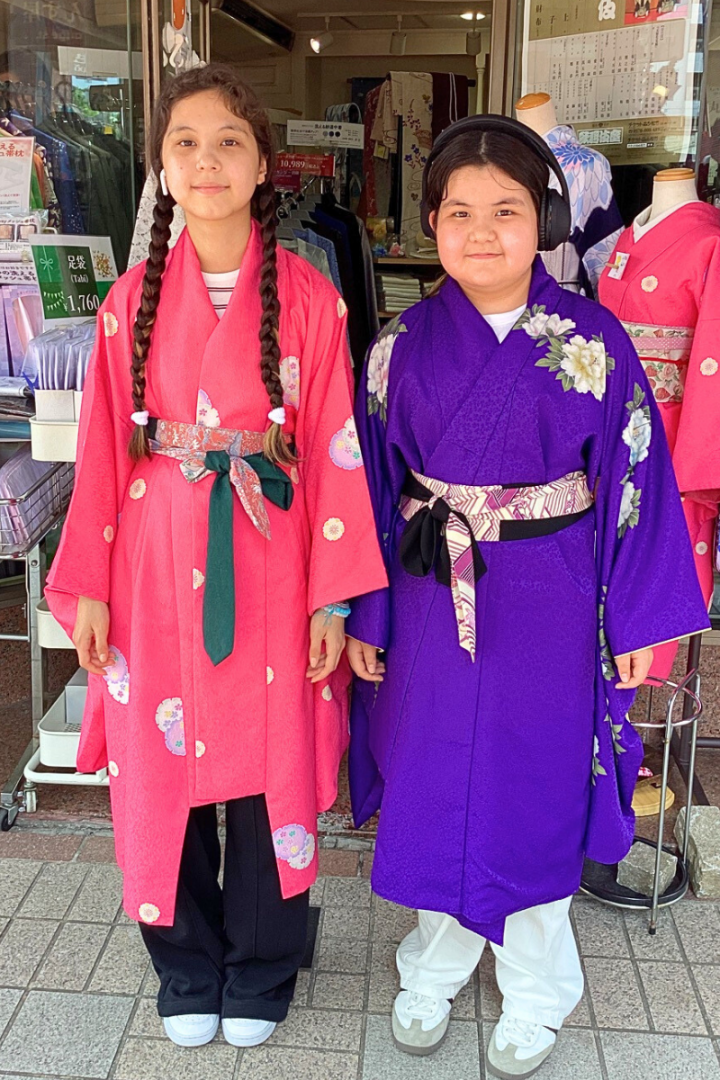
10) Wrap-up & strong CTAs — your kimono journey:
store → EC → global delivery
10.1 The 3-step game plan (copy this)
- Try & buy in person at a convenient branch—if you’re in Kyoto, head to Tansuya Kyoto Avanti (1F, Kyoto Station south/Hachijō exit), open 10:00–21:00.
- Travel light: order from the Tansuya Online Store and ship to your hotel or home in Japan—free shipping from ¥3,980 (tax-in). Tansuya Online Store
- Keep collecting from overseas: access the Buyee Cart on Tansuya’s site and ship worldwide (Buyee fee currently ¥300/order + international shipping).
10.2 Your direct paths (bookmark these)
- Find a store near your itinerary — official Store List (Tokyo, Kyoto, Osaka, Fukuoka and more).
- Shop the Online Store — filters by Scene / Price band / Size / Item for fast, wearable matches.
- Overseas checkout (Buyee Guide) — languages, payment methods, fee breakdown, and shipping countries.
- Kyoto quick stop — Tansuya Kyoto Avanti store page (address, hours, access).
10.3 Two quick tables to decide fast
A) Where are you shopping?
| Situation | Best move | Why |
| In Japan (Kyoto/any city) | Walk into Tansuya (e.g., Kyoto Avanti 1F, 10:00–21:00) | Try sizes, match an obi, pack in a tatōshi and go. |
| In Japan but short on time | Online Store → ship to hotel/home (free ≥ ¥3,980) | Saves suitcase space, same chain curation. |
| Already back home | Tansuya site with Buyee cart | Global checkout, ¥300/order Buyee fee + intl. shipping. |
B) One-minute filter recipes (Online Store)
| Goal | Filters to set |
| Souvenir under ¥10,000 | Scene Casual → Price ¥5,001–10,000 → Item Komon/Haori → Size to fit. |
| Photo-ready ¥20,000~¥30,000 | Scene Formal → Price ¥20,001–50,000 → Item Iromuji/Homongi → add Fukuro obi. |
| Beginner & rain-proof | Scene Casual → Item Polyester Komon + Nagoya obi. |
10.4 Ready-to-use scripts
In-store (English OK):
“I’m looking for a [budget] set for [casual / dinner / semi-formal].
My yuki(裄) is about [xx cm]. Could I try [komon / iromuji / homongi] with a [Nagoya / Fukuro] obi in [preferred colors]?”
Online (note to hotel):
“Guest: [Your Name], check-in [Date]. Please hold parcel at front desk.”
Overseas via Buyee:
“Using the Buyee Cart on Tansuya’s site; I understand the ¥300/order fee + international shipping/duties.”
10.5 Final nudge (so you actually do it)
- If you’re in Kyoto today: pop into Tansuya Kyoto Avanti before sightseeing—being steps from the station makes this the easiest win.
In Tokyo Asakusa today: pop into MEGA Tansuya Asakusa before sightseeing. - If you fly soon: place an Online Store order to your hotel right now; aim for ¥3,980+ to trigger free domestic shipping.
- If you’re reading this at home: open Tansuya’s site from your country—the Buyee Cart will appear for global checkout.
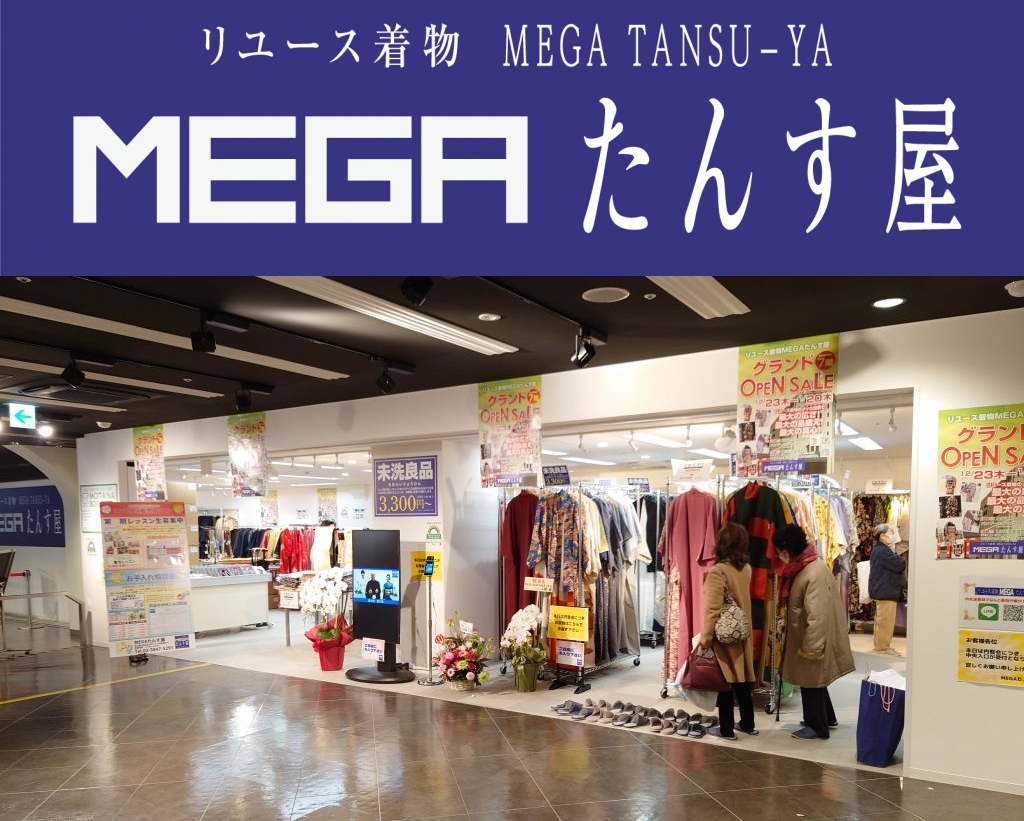
Enjoy kimono casually. ‘Tansuya’ supports new encounters between you and kimono.” Body-flattering options available! For recycled kimono selection, we recommend Tansuya with 33 stores nationwide.
https://tansuya.jp/

MEGA Tsnsuya Haneda Airport Garden
MEGA Tsnsuya Asakusa
Tansuya Kyoto Avanti